Is Anyone Paying Attention to the Women in Tanzania?
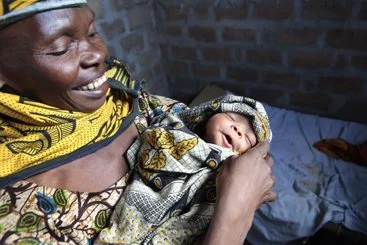
Tanzania has, by most measures, made real progress on maternal health in the last decade. Maternal deaths fell roughly 80% between 2015 and 2022, from 556 deaths per 100,000 live births to 104 per 100,000, according to Tanzania's own Demographic and Health Survey. That's thousands of women alive today who would not have been a decade ago.
And yet, in 2026, the gains are fragile. Women are still dying from causes we know how to prevent. Babies are still not surviving their first month of life when they should have. And in early 2025, the floor of international support that helped fund this progress dropped out from under the country.
Tanzania saw a 46% cancellation of USAID programs, one of the steepest cuts on the African continent. The Lancet projects roughly 140,000 additional maternal deaths globally between 2025 and 2030 because of those cuts, with another 200,000 deaths tied to the loss of family planning services. Tanzania is named, by modelers, as one of the countries where the impact will be felt most sharply.
So the question we keep coming back to is a simple one. With less aid, fewer partners, and the same number of women in need, who is paying attention?
Who is CCBRT?
CCBRT, the Comprehensive Community-Based Rehabilitation in Tanzania, started in 1994 in Dar es Salaam as a small community rehabilitation program. Today it is the largest local provider of disability and rehabilitative healthcare in the country, and a FIGO-accredited training site for fistula surgeons across the region.
Most of CCBRT's work happens out of public view. They run the programs other systems can't take on: women with disabilities, adolescents, high-risk pregnancies, survivors of obstetric fistula. In 2022, they opened a dedicated Maternal and Newborn Wing in Dar es Salaam, built specifically for the patients public hospitals are too overwhelmed to absorb.
For more than fifteen years, CCBRT's growth was supported by the Kupona Foundation, a U.S.-based partner that has raised over $7 million for treatment, training, and capital projects since 2009. Kupona was a major part of how CCBRT's funding model worked, and a meaningful chunk of that flow was tied to USAID-backed programs.
When the cuts hit in early 2025, that pipeline narrowed quickly. Partners we used to work with lost roles, lost programs, and in some cases lost their entire teams. CCBRT itself is still operating, but with reduced bandwidth and a much heavier burden of advocacy work that funded partners used to carry. That is the gap we have stepped into. ACTUM is partnering directly with CCBRT now, in part because the people who used to amplify their work simply aren't there to do it anymore.
The Numbers, and What They Mean
Tanzania's maternal mortality ratio sits at about 104 deaths per 100,000 live births based on 2022 survey data. With roughly 1.9 to 2 million births a year, that translates to somewhere between 2,000 and 5,000 maternal deaths annually depending on whose modeled estimate you use. (WHO's 2020 modeled estimate puts the ratio higher, around 238 per 100,000.) The honest read is: the trend is good, the absolute number is still unacceptable, and the cuts threaten to reverse it.
On the newborn side, UNICEF data shows about 106 babies die in Tanzania every day before reaching one month old. That works out to roughly 38,000 newborn deaths a year, with 87.5% of them in the first week of life. The pattern tells you exactly where care needs to be: at and immediately after delivery.
Three-quarters of maternal deaths in Tanzania come from causes hospitals know how to treat: hemorrhage, infection, and high blood pressure during pregnancy. The medicine isn't the missing piece. Access is.
The Injury Most People Have Never Heard of
Obstetric fistula is one of the clearest examples of what happens when access fails. It develops during prolonged, obstructed labor when emergency obstetric care doesn't arrive in time. The result is a tear between the birth canal and the bladder or rectum, leaving women with chronic incontinence. In most cases the baby does not survive the labor.
Roughly 3,000 women in Tanzania develop a fistula each year, according to estimates compiled by CCBRT and the Fistula Foundation. The medical injury is treatable. The social injury is harder.
Qualitative research published in BMC Women's Health found that women living with fistula in Tanzania often aren't allowed to cook for their families. Some are sent back to their parents' homes. Many are divorced. Religious and cultural beliefs sometimes frame the condition as a punishment or a curse, which can keep women from seeking treatment for years, sometimes decades. One earlier study, "I am nothing," took its title from a phrase the women themselves used to describe how they understood their lives after the injury.
So when CCBRT talks about fistula care, they aren't only talking about surgery. They're talking about returning a woman to a life that, for many of their patients, has effectively ended.
What Healing Actually Looks Like
CCBRT has performed surgery on more than 10,000 women living with fistula, with success rates above 90%. The surgical side of the work is, frankly, the easier part. Recovery and reintegration are where the model gets unusual.
The Mabinti Centre, opened in 2009, runs a four-month vocational program for fistula survivors after surgery. Women learn screen-printing, sewing, batik, beading, crochet, basic budgeting, and business skills. Each graduate leaves with a sewing machine, scissors, fabric, and a year of follow-up support to get a small business off the ground. Income from the products sold helps fund the Centre and CCBRT's outreach work, which is how more women living with untreated fistula are identified in the first place.
It's a quiet, practical model. It treats the body, then it treats everything that broke around the body.
Care That Begins Before the Emergency
The Maternal and Newborn Wing exists so fewer women ever reach that point. It provides care for high-risk pregnancies, emergency maternal services, support for adolescent mothers and mothers with disabilities, and continuous care from the first antenatal visit through postpartum. Family planning is integrated at every stage, which is the single most effective lever for reducing maternal and infant mortality over time.
That last point matters more than usual right now. USAID was the single largest source of contraceptive funding in low-income countries before the cuts, providing roughly $600 million a year. Modelers project 40 to 55 million additional unintended pregnancies across 51 countries because of the loss, with Tanzania, the Democratic Republic of the Congo, Uganda, and Mozambique projected to be hit hardest.
Beyond Healthcare
Tanzania's 2022–2023 HIV Impact Survey found prevalence of 5.6% among women, compared to 3.0% among men. Adolescent girls and young women account for around 80% of new infections. Early pregnancy interrupts schooling, which limits earning potential, which limits a woman's ability to seek care later. The threads connect.
When care is out of reach, the cost isn't only medical. It shows up in families, in school enrollment numbers, in HIV transmission rates, in who gets to make decisions inside their own household. Maternal health is, in practice, a measure of how a country treats its women across every other system.
Why This Matters Now
These systems don't fail loudly. They fail quietly. In a missed antenatal appointment because the bus fare was too high. In a referral that arrived two hours late. In a partner who didn't come with funding this year. In an organization holding the same caseload with half the staff.
Behind every number is a woman who should have had a different outcome. The numbers in this post are real. The women they describe are still in those communities. With the right partners, the next decade of progress is possible. Without them, the last decade unwinds.
Where ACTUM Comes In
ACTUM Giving is partnering directly with CCBRT to fund maternal and newborn care for women who would otherwise have nowhere to go. That includes women living with obstetric fistula before and after surgery, women with disabilities navigating pregnancy and delivery, high-risk pregnancies referred from public hospitals at capacity, and adolescents and first-time mothers without local options.
CCBRT does not turn patients away because they cannot pay. That policy used to be partially backstopped by international aid. With that floor lower than it has been in decades, the partnership work shifts from supplemental to essential.
This isn't a campaign and it isn't charity. It's the basic question of whether women in one of the countries hit hardest by this year's funding cuts get to make it through their pregnancies. We think the answer should be yes.
Sources
Tanzania's Success to Reduce Maternal Mortality, Africa CDC: https://africacdc.org/news-item/tanzanias-success-to-reduce-maternal-mortality-ushers-in-a-model-for-africa/
Reducing maternal mortality in Tanzania's Kigoma region, WHO Africa: https://www.afro.who.int/photo-story/reducing-maternal-mortality-tanzanias-kigoma-region
Maternal and Reproductive Health in Tanzania, U.S. CDC: https://www.cdc.gov/global-reproductive-health/php/maternal-reproductive-health-tanzania/index.html
Tanzania Maternal and Newborn Health country profile, UNICEF: https://data.unicef.org/wp-content/uploads/cp/maternal-newborn-health/maternal-and-newborn-health_TZA.pdf
United Republic of Tanzania country data, UNICEF: https://data.unicef.org/country/tza/
Effects of reductions in US foreign assistance on HIV, TB, family planning, and maternal and child health, The Lancet Global Health: https://www.thelancet.com/journals/langlo/article/PIIS2214-109X(25)00281-5/fulltext
The USAID Cuts: Little Sign of Mercy for Life-Saving Health Programs, Center for Global Development: https://www.cgdev.org/blog/usaid-cuts-little-sign-mercy-life-saving-health-programs
Health update on USAID cuts in Tanzania, Tanzanian Affairs (2025): https://www.tzaffairs.org/2025/06/health-30/
Aid Cut, Lives Lost: Estimating the Impact of USAID's Withdrawal on Maternal Mortality in Six African Countries, Health Policy and Planning: https://academic.oup.com/heapol/advance-article/doi/10.1093/heapol/czag034/8513131
CCBRT Hospital, Who We Are: https://ccbrt.org/who-we-are/
CCBRT Hospital, Maternal and Newborn Wing: https://ccbrt.org/maternal-and-newborn-wing/
CCBRT Hospital, Maternal & Newborn Health: https://ccbrt.org/maternal-newborn-health/
Kupona Foundation, About: https://kuponafoundation.org/about/
10 Years of the Mabinti Centre, Kupona Foundation: https://kuponafoundation.org/10-years-of-the-mabinti-centre/
Mabinti Centre, where Tanzania's fistula survivors mend their lives, WomenLift Health: https://www.womenlifthealth.org/article/mabinti-centre-where-tanzanias-fistula-survivors-mend-their-lives/
Reasons for delay in seeking treatment among women with obstetric fistula in Tanzania, BMC Women's Health: https://bmcwomenshealth.biomedcentral.com/articles/10.1186/s12905-019-0799-x
"I am nothing": experiences of loss among women suffering from severe birth injuries in Tanzania, PMC: https://pmc.ncbi.nlm.nih.gov/articles/PMC3228718/
End "shame, isolation and segregation" of fistula sufferers, UN News / UNFPA: https://news.un.org/en/story/2019/05/1039031
Tanzania HIV Impact Survey 2022–2023, National Bureau of Statistics: https://www.nbs.go.tz/nbs/takwimu/THIS2022-2023/THIS2022-2023_Summary_Sheet.pdf
Comprehensive Community Based Rehabilitation Tanzania, Wikipedia: https://en.wikipedia.org/wiki/Comprehensive_Community_Based_Rehabilitation_Tanzania